- The African AI Narrative
- Posts
- AI, Warfare & the Battle for Global Power
AI, Warfare & the Battle for Global Power
How Artificial Intelligence Is Reshaping Warfare, Diplomacy, and Africa’s Strategic Future

Sarah Njamu
February 13th, 2025 • Estimated Reading Time: 9 minutes

Did You Miss Last Week’s Game-Changing Edition? Here’s What You Need to Know!
If there was ever a moment that shook the AI world to its core, last week was it—and if you missed our coverage, trust us, you’ll want to go back and read it.
🚨 DeepSeek: The Disruptor No One Saw Coming 🚨
In a stunning turn of events, a Chinese AI upstart, DeepSeek, unleashed a revolutionary model that sent tech giants spiralling into chaos. Stocks plummeted, valuations crumbled, and the once untouchable dominance of Silicon Valley took a massive hit. Nvidia alone lost a staggering $593 billion in market value—yes, billion with a B—all because of one AI model.
But this wasn’t just a financial shake-up. This was a wake-up call for the entire industry. For the first time, a non-Western AI contender isn’t just catching up—it’s competing head-on, proving that AI innovation is now truly global.
🧠 Why This Matters for Africa
While the world reeled from DeepSeek’s impact, we looked at the bigger picture—how this AI revolution could empower Africa. From unlocking AI accessibility for researchers and startups to fueling new innovations in finance, healthcare, and language processing, DeepSeek R1 isn’t just a disruptor—it’s a gateway to an AI-powered future for emerging markets.
🔥 The AI Race Has Shifted—Are You Paying Attention?
The question isn’t whether AI will shape the future. It already is. But who will control it? Who will benefit? And more importantly—how can YOU stay ahead?
If you haven’t read last week’s edition, go back NOW. The insights, the breakdowns, the implications—this is knowledge that could change the way you think about AI, business, and the global tech race. Don’t get left behind.
Click here to dive in:

📩 Catch up now and stay ahead of the AI revolution!
Crisis in the Congo: The Unfolding and its Global Implications
Inspired by Recent Reports on the Escalating Tensions in Central Africa
The Democratic Republic of Congo (DRC) stands on the precipice of a full-scale conflict as violence erupts once more in its eastern regions. The resurgence of the M23 rebel group, accusations of foreign interference, and the growing complexities of regional diplomacy have cast a long shadow over Central Africa. As battle lines are drawn, the international community watches with bated breath. But is this just another chapter in Congo’s turbulent history, or the beginning of something far more consequential?
M23 and the Ghosts of Past Wars
The M23, a formidable rebel faction largely composed of Tutsi fighters, has once again stormed back into the spotlight, seizing territories and reigniting hostilities with the Congolese government. Despite numerous peace agreements and ceasefires brokered over the years, the rebel group’s resurgence signals that peace in eastern Congo remains fragile at best—illusory at worst.
At the heart of the crisis lies an explosive accusation: Kinshasa claims that Rwanda is actively backing the M23, supplying weapons, intelligence, and logistical support. Rwanda, in turn, vehemently denies these allegations, insisting that it is being scapegoated for Congo’s internal struggles. This back-and-forth, however, is not merely political rhetoric. Reports from the United Nations and independent watchdogs suggest Rwanda’s involvement may be more substantial than it lets on, deepening the fractures within the Great Lakes region.
South Africa’s High-Stakes Gamble
South Africa, a key player in continental diplomacy, has stepped into the fray with an ambitious goal—preventing the conflict from spiraling out of control. President Cyril Ramaphosa has committed South African troops under the banner of the Southern African Development Community (SADC) military mission. The move signals Pretoria’s resolve to play peacemaker, but it is also fraught with risk.
For decades, South Africa has been seen as a stabilizing force in Africa’s most volatile regions. But military interventions in foreign conflicts have historically been met with skepticism, often failing to yield the desired outcomes. Will South Africa’s involvement this time around be any different? Or will it find itself embroiled in a conflict with no clear exit strategy?
Beyond the Battlefield: A New Age of Conflict? 🛡️
While bullets and diplomacy dominate the immediate headlines, the crisis in Congo raises broader questions about the nature of modern conflict. Wars are no longer fought in trenches alone. Technology, intelligence, and rapidly evolving strategies are transforming the way battles are waged and won. The DRC may well become a testing ground for how 21st-century conflicts are shaped—not just by men on the ground, but by unseen forces operating in ways yet to be fully understood.
Dive into the full news article here:
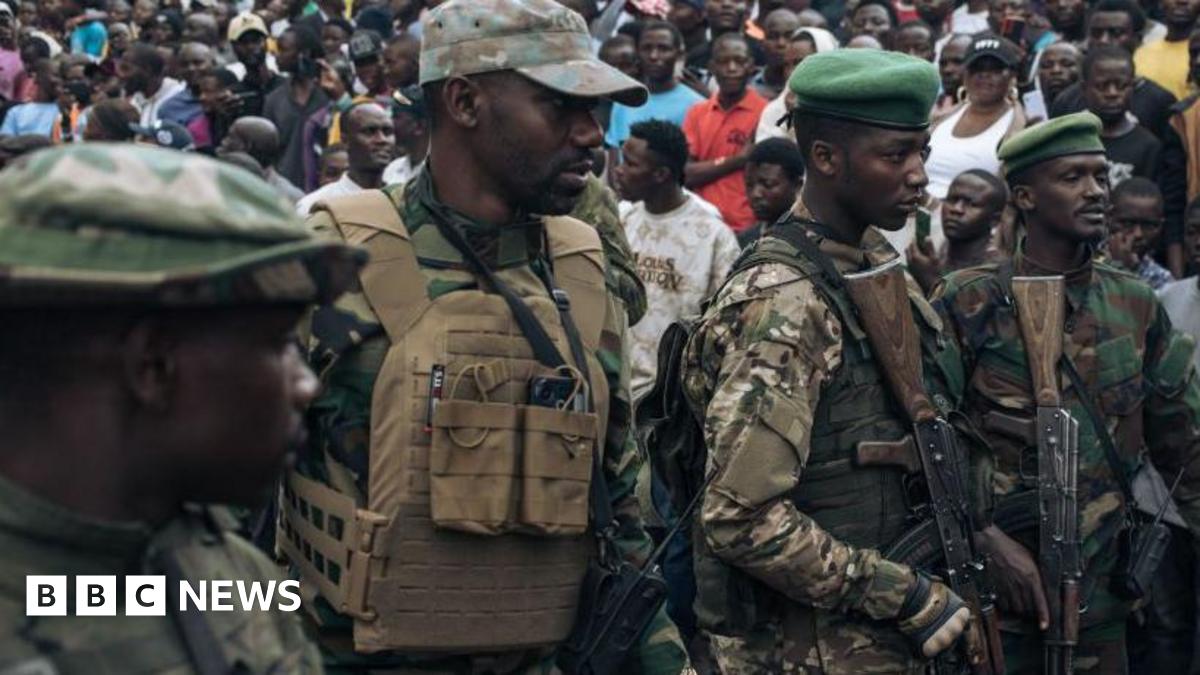
As we delve deeper into this week’s newsletter, we explore these evolving battlefronts and their impact on Africa’s security landscape. Stay with us for more exclusive insights and analysis.
This Week’s Focus – The Age of AI Warfare: How the Battlefield Is Being Rewritten 📑
We are at the dawn of a new era—one where wars may no longer be fought solely by soldiers on the ground, but by algorithms, drones, and autonomous systems operating with an intelligence once thought to be the realm of science fiction. Artificial Intelligence is not just transforming industries—it is reshaping the very nature of conflict. The question is: Are we prepared?
The Rise of AI-Powered Warfare 🛸
From the shadows of cyber warfare to the frontline of autonomous combat, AI is revolutionizing modern military strategies. The world’s superpowers—the U.S., China, Russia, and Europe—are in an intense AI arms race, each striving to outmatch the other in developing next-generation autonomous weapons, intelligent surveillance, and predictive warfare tactics.
Staggering Statistics: The Scale of AI Militarization
The global military AI market was valued at $6.3 billion in 2022 and is projected to reach $13.7 billion by 2028, growing at an annual rate of 13.1%.
The U.S. Department of Defense requested $874 billion in military spending for 2024, with a substantial portion allocated to AI-driven military advancements.
China, as part of its 'Made in China 2025' strategy, aims to surpass the U.S. in AI military applications by 2030, investing billions into AI-driven autonomous weapon systems.
A report by the United Nations suggests that over 30 countries are actively developing lethal autonomous weapons systems (LAWS), despite calls for regulation.
Drones That Decide: The Rise of Autonomous Lethal Weapons
AI-powered drones have already seen real-world deployment:
The Bayraktar TB2 drone, used extensively in the Russia-Ukraine war, has showcased how AI-assisted autonomous targeting can change the course of conflicts.
In Libya, an AI-driven drone reportedly conducted a fully autonomous airstrike without human intervention in 2020—a chilling glimpse into the future of warfare.
Loitering munitions, also known as ‘suicide drones,’ such as the Israeli Harpy and Turkish Kargu-2, can hover over a target area and independently strike once a hostile entity is detected.
Predicting the Enemy’s Next Move: AI and Strategic Intelligence
The Pentagon’s Project Maven employs AI to sift through vast amounts of battlefield data, identifying threats and generating real-time counter-strategies.
AI-powered satellites and predictive analytics help military planners anticipate enemy troop movements with over 90% accuracy, giving an unprecedented strategic advantage.
Russia has invested heavily in AI-powered cyber warfare units, aiming to disrupt enemy infrastructure and manipulate digital warfare environments.
AI and Cyber Warfare: The Invisible Battlefield
AI is an unseen soldier in the realm of cyber warfare. Governments and hacker groups alike are leveraging AI to penetrate secure networks, launch cyber-attacks, and manipulate digital narratives.
Cybersecurity Ventures predicts cybercrime damages will cost the world $10.5 trillion annually by 2025, fueled by AI-enhanced hacking tools.
AI-driven deepfake technology has already been weaponized to create fake political messages, erode public trust, and manipulate election outcomes.
China’s Great Cannon and Russia’s Fancy Bear hacking groups are using AI-enhanced tools to conduct large-scale cyber-espionage and misinformation campaigns.
To delve deeper into the transformative impact of artificial intelligence on modern warfare, I recommend watching the following video:
This documentary provides an in-depth analysis of how AI is reshaping military strategies and the potential implications for the future of conflict.
The Ethical Minefield of AI Warfare
With such power comes a heavy moral burden. The rise of Lethal Autonomous Weapons Systems (LAWS)—machines that can engage targets without direct human oversight—has sparked intense global debate.
The United Nations has called for a ban on fully autonomous weapons, but the world’s leading military powers have resisted formal treaties.
In 2018, over 4,500 AI researchers, including Elon Musk and Google’s DeepMind scientists, signed a petition urging the UN to ban AI-powered killer robots.
In 2021, the U.S. Department of Defense released an AI Ethics Framework, outlining accountability measures for AI-driven weapons, but with no legally binding oversight.
Africa and AI Warfare: A New Battleground?
While much of the AI warfare narrative is dominated by global superpowers, Africa is not exempt from these developments. In fact, AI is set to reshape security, intelligence, and military operations across the continent in profound ways.
AI-Driven Surveillance and Counterterrorism
Countries like Kenya, Nigeria, and South Africa are increasingly investing in facial recognition technology, drone reconnaissance, and AI-powered security systems to counter terrorism and urban crime.
The Sahel region has seen a surge in drone-based surveillance operations targeting insurgent groups, with France, the U.S., and regional governments using AI to track militant movements.
Drone Warfare in African Conflicts
Ethiopia has deployed drones in its conflict against Tigray rebels, leveraging AI-powered UAVs to conduct airstrikes and reconnaissance missions.
Turkey’s Bayraktar drones have been widely used in Libya, Nigeria, and Ethiopia, showcasing the growing role of AI-driven aerial warfare on the continent.
AI and Information Warfare in Africa
In 2022, an AI-generated disinformation campaign targeted Nigeria’s presidential election, spreading fake news and deepfake videos to influence public opinion.
Governments across Africa are grappling with the weaponization of AI-driven propaganda, making it harder to distinguish truth from fiction.
The Risk of AI-Driven Proxy Wars
Africa has historically been a battleground for proxy wars between global superpowers. With AI-driven military advancements, we may see foreign powers deploying AI technology on African soil, using local conflicts as testing grounds for autonomous weapons and cyber warfare tactics.
The Road Ahead: A Call for Regulation & Preparedness
The integration of AI into warfare is inevitable—but can it be controlled?
🔹 African nations must invest in AI education, research, and policy frameworks to ensure the continent is not left vulnerable to AI-driven security threats.
🔹 Regional organizations like the African Union must establish guidelines on AI in warfare to prevent human rights abuses and ensure AI technologies are used responsibly.
🔹 Countries must collaborate on cybersecurity measures to counteract AI-driven cyber threats, misinformation campaigns, and digital warfare.
As AI continues to reshape global security, Africa cannot afford to be a spectator. The battle for ethical AI warfare is already here, and the decisions made today will determine the future of conflict on the continent.
AI is changing warfare faster than we can regulate it. Watch this video to see how autonomous weapons and cyber warfare are reshaping global conflict:
AI as the Ultimate Peacekeeper: How Artificial Intelligence is Redefining Diplomacy and Global Stability
As much as AI is reshaping the battlefield, it is also emerging as a force for peace, diplomacy, and global governance. While discussions around AI often gravitate toward its militarization, an equally compelling narrative is unfolding—one where AI is becoming a powerful tool for conflict prevention, diplomatic strategy, and bureaucratic efficiency.
In an era defined by geopolitical tensions, climate crises, and global economic instability, artificial intelligence has the potential to be a game-changer in international relations. But can AI truly become the ultimate peacekeeper? Let’s explore how AI is transforming diplomacy, conflict resolution, and governance.
AI: The Diplomat We Never Knew We Needed
Let’s be real—AI isn’t just running chatbots and making cool art anymore. It’s out here predicting conflicts, negotiating peace deals, and keeping cyber wars in check. Crazy, right? Swipe through to see how AI is stepping into the world of diplomacy and peacekeeping in ways we never imagined. ➡️
Upcoming Event: The Future of AI in Africa Global Summit
📅 Event Details:
📍 Location: Radisson Blu Hotel, Lusaka, Zambia
📆 Dates: February 26th - 28th, 2025
🔗 Register Now: https://aitechafricasummit.com/
Why You Need to Be There:
✅ Hands-On AI Workshops – Learn directly from AI experts and industry leaders.
✅ Unmatched Networking – Connect with innovators, investors, and policymakers driving AI’s future.
✅ Exclusive Insights – Discover how AI is shaping finance, healthcare, agriculture, and governance.
✅ Business & Career Growth – Get strategies, partnerships, and opportunities to stay ahead.
Africa’s AI moment is now. Don’t sit on the sidelines—be part of the movement.
📢 Spread the Word!
Let’s build an AI-powered future for Africa—together.
🔗 Secure Your Spot Today: https://aitechafricasummit.com/
Test Your AI IQ
Think you’re keeping up with the AI revolution? Put your knowledge to the test!
Listen To Our Newsletter on the Go!

🎧 The African AI Narrative: Audio Edition
Pressed for time? Let our AI hosts break it all down for you! This week, they’re diving into the rise of AI warfare, from autonomous drones to cyber battles. Stay informed, stay ahead.
Final Thoughts: A Future Where AI is a Diplomat, Not a Soldier
AI doesn’t have to be a weapon—it can be a bridge. It can be the diplomat that never tires, the mediator that remains objective, and the bureaucratic force that removes inefficiencies.
🌍 The choice is ours: will AI define a future of endless war, or will it pave the way for an era of unprecedented peace?
The conversation doesn’t have to end here. Share this newsletter with somebody who you think can benefit from it! Stay Curious, and we’ll see you next week.
Catch you on the flip side,
The African AI Narrative Team.