- The African AI Narrative
- Posts
- Manus AI vs ChatGPT: Is China’s AI Finally Ahead?
Manus AI vs ChatGPT: Is China’s AI Finally Ahead?
Is China leading the AI race? Manus AI is redefining what an AI agent can do—here’s why it matters.

Sarah Njamu
March 13th, 2025 • Estimated Reading Time: 10 minutes

Missed Our Last Edition?: Women Are Shaping the Future of AI
AI isn’t just a technology—it’s a movement. And women across the world are making sure it’s a movement that includes everyone. In our last edition, we highlighted the pioneers, researchers, and entrepreneurs who aren’t just part of the AI revolution—they’re leading it. 💡
From ethical AI advocates fighting bias in machine learning to African innovators building AI solutions for their communities, these women are proving that the future of AI isn’t just being built in Silicon Valley—it’s happening everywhere.
But let’s be real—the road isn’t easy. 🚧 The AI industry still struggles with representation, funding disparities, and algorithmic bias that reinforce systemic inequalities. Yet, change is happening. Across Africa and beyond, women are launching AI startups, mentoring the next generation, and driving policies that will define the industry for years to come.
If you missed our last edition, now’s the time to catch up. These aren’t just stories—they’re a call to action. The future of AI needs diverse voices, and it’s on all of us to make sure they’re heard.
👉 Dive in below:

Manus AI Explained: The AI That Doesn’t Just Talk—It Acts
For years, AI assistants like ChatGPT have been impressive at answering questions, generating text, and assisting with research. But there’s always been a catch—they rely on you to take the next step. Whether it’s writing an email, analyzing data, or planning a trip, traditional AI tools provide suggestions, but the execution? That’s still on you.
Manus AI is changing that. Developed by Chinese AI startup Monica.im, Manus isn’t just another chatbot—it’s an autonomous AI agent designed to think, plan, and execute tasks independently. Instead of just offering recommendations, it takes action, handling complex, multi-step processes with minimal human involvement.
This isn’t just an upgrade—it’s a shift in how AI functions. So what makes Manus AI different, and why is it gaining so much attention? Let’s break it down.
🛠️ What Is Manus AI? A Digital Employee, Not Just an Assistant
Think of Manus AI as a "digital employee" rather than just a chatbot. While tools like ChatGPT provide suggestions and require human oversight, Manus AI takes an objective and executes it from start to finish.
Take financial analysis, for example. A typical AI assistant might summarize market trends, but Manus AI goes further:
✅ Fetches real-time stock market data from multiple sources
✅ Analyzes trends using Python-based computations
✅ Generates visual reports with charts and key insights
✅ Formats and delivers a final presentation—no manual input required
And that’s just one use case. Whether it’s building websites, managing spreadsheets, conducting deep research, or automating entire business workflows, Manus AI eliminates the need for human micromanagement, allowing users to focus on strategy rather than execution.
This shift from AI assistant to AI agent is redefining what artificial intelligence can do.

💡 How Manus AI Works: A Multi-Agent System
What makes Manus AI different isn’t just what it can do—it’s how it does it. Unlike traditional AI models that rely on a single system to process inputs and generate responses, Manus operates like a team of specialized AI agents, each playing a distinct role in getting the job done.
Here’s how it works:
✅ Planner Agent – Breaks down the user’s request into a clear, step-by-step execution plan.
✅ Executor Agent – Carries out each task, whether it’s gathering information, writing code, analyzing data, or formatting reports.
✅ Verification Agent – Reviews the output for accuracy and ensures the final result meets the user’s request before delivering it.
This means Manus AI doesn’t just react to commands—it strategizes, executes, and verifies its own work, using external tools, web browsing, and automation to complete complex tasks from start to finish.
In short, Manus AI isn’t waiting for instructions at every turn. It’s thinking, planning, and acting—just like an efficient digital employee.
🌍 Why Does This Matter? The Future of AI Is Autonomous
AI is evolving. We’re moving beyond chat-based assistants toward fully autonomous AI agents that don’t just assist—they take action. Manus AI is at the forefront of this shift, introducing a new way for businesses, researchers, and individuals to interact with technology.
For Africa, this evolution could be transformative. Imagine AI-powered agents handling business automation, streamlining government services, personalizing education, and improving healthcare efficiency—all with minimal human input. Instead of being just another tool, AI could become an active driver of progress, reducing administrative burdens and accelerating innovation across industries.
But with this power comes responsibility. Can we trust AI to make decisions without oversight? What happens when an AI agent makes a mistake? As we embrace this new wave of AI, these are the critical questions we must address to ensure technology remains a tool for progress—not a force of disruption.
For a more visual explanation of Manus AI, watch this video 🎬 :
Autonomy, Intelligence, and Execution: Inside Manus AI’s Capabilities
Manus AI isn’t just another AI assistant—it’s a fully autonomous AI agent designed to think, plan, and execute tasks without constant user input. Unlike traditional chatbots that provide suggestions, Manus AI takes action, making it one of the most advanced general-purpose AI agents in the world.
So, what exactly makes Manus AI capable of true autonomy? Let’s break down its core capabilities.

1️⃣ Multi-Step Task Planning: AI That Thinks Like a Human
Most AI tools generate single responses, requiring users to guide each step. Manus AI, however, is built for long-term task execution. Given a broad objective, it can:
✅ Break down complex tasks into structured, step-by-step actions
✅ Decide the best execution plan without human micromanagement
✅ Adjust and optimize if new information becomes available
For instance, when tasked with “screening job candidate résumés”, Manus AI:
1️⃣ Uploads files and extracts key data from each CV
2️⃣ Analyzes qualifications and ranks candidates based on predefined criteria
3️⃣ Generates a final hiring report with a summary of top candidates
This level of independent decision-making allows Manus AI to function like a digital project manager, handling multi-step workflows from start to finish.
2️⃣ Seamless Tool & Web Integration: An AI That Uses the Internet Like You Do
Unlike static AI models that rely solely on training data, Manus AI interacts with external tools and the web in real-time.
✅ Fetches live data from APIs, databases, and online sources
✅ Navigates websites, fills forms, and automates repetitive tasks
✅ Runs scripts and integrates with business software
For example, when planning a business trip, Manus AI can:
🔹 Check real-time flight prices and hotel availability
🔹 Compare customer reviews and suggest optimal travel plans
🔹 Book reservations and compile a final itinerary
It doesn’t just gather information—it executes, making it an AI-powered virtual assistant with real-world utility.
3️⃣ Multi-Modal Processing: Handling More Than Just Text
Manus AI isn’t limited to text-based interactions—it processes multiple data types.
✅ Reads and analyzes PDFs, spreadsheets, and documents
✅ Extracts key insights from tables, reports, and charts
✅ Writes and executes Python code for data analysis
For example, when tasked with “analyzing financial data”, Manus AI:
📂 Unzips a folder of financial reports
📊 Extracts and compares key performance indicators (KPIs)
📑 Generates a formatted summary report with visual charts
Instead of manually sifting through documents, users receive structured, ready-to-use insights.
4️⃣ Adaptive Learning: AI That Gets Better Over Time
Unlike traditional AI assistants that start fresh in every session, Manus AI has persistent memory and learns from user preferences.
📌 Adapts to formatting preferences for reports and presentations
📌 Remembers frequently used sources for research tasks
📌 Automates recurring processes like weekly financial summaries
For businesses, this means Manus AI becomes more efficient over time, reducing the need for repeated manual adjustments.
The Bottom Line: AI That Works for You
Manus AI isn’t here to simply answer questions—it’s here to get work done.
Whether it's conducting research, automating reports, or managing workflows, it’s built to think, plan, and execute independently.
This shift from AI assistant to AI agent is redefining what artificial intelligence can achieve.
🎬 Watch this demo to see how it autonomously screens résumés, conducts research, analyzes data, and even builds websites—all without human intervention.
⚔️ The Showdown: Manus AI vs. GPT-4.5 vs. Google Gemini
The AI landscape is evolving fast, and three key players are leading the charge: Manus AI, OpenAI’s GPT-4.5, and Google’s Gemini. Each represents a different approach to artificial intelligence—GPT-4.5 dominates in language generation, Gemini leads in multimodal AI, and Manus AI is pioneering fully autonomous task execution.
So, which one stands out where? Let’s break it down.
The Core Difference: AI Assistant vs. AI Agent
AI Model | What it does Best | Key Use Cases |
|---|---|---|
GPT-4.5 | Conversational intelligence, deep reasoning, and creative writing. | Research, coding assistance, knowledge retrieval, text-based automation |
Google Gemini | Multimodal AI (text, images, video) & deep integration with Google tools | Image analysis, real-time search, multilingual AI, multimedia generation |
Manus AI | Full autonomy—plans and completes tasks from start to finish | Business automation, research, software execution, data analysis, workflow management |
While GPT-4.5 and Gemini are powerful AI assistants designed for conversation and knowledge retrieval, Manus AI is an AI agent—meaning it doesn’t just generate ideas, it executes them independently.
📖 GPT-4.5: The Conversational Powerhouse
GPT-4.5 is OpenAI’s latest advancement in natural language processing, designed to enhance reasoning, emotional intelligence, and creativity. It excels in:
✅ Deep research & knowledge recall
✅ Creative writing & storytelling
✅ Coding assistance & debugging
However, GPT-4.5 isn’t built for autonomous execution. While it can provide highly accurate responses, users must manually apply its insights to real-world actions.
📸 Google Gemini: The Multimodal AI
Google’s Gemini was designed to handle multiple forms of input—text, images, and possibly even video and audio. Its strengths lie in:
✅ Analyzing and interpreting images & videos
✅ Performing multilingual AI tasks
✅ Providing up-to-date knowledge through Google Search integration
Gemini is particularly useful for tasks that require cross-modal understanding—for example, analyzing documents, extracting insights from visual data, or processing real-time search queries.
However, while Gemini is highly versatile, it doesn’t perform complex autonomous actions. It provides insights but requires users to take action.
🤖 Manus AI: The Autonomous AI Agent
What sets Manus AI apart is its ability to execute multi-step tasks without human supervision. Unlike GPT-4.5 and Gemini, which rely on user input for every step, Manus AI can:
✅ Research, analyze, and generate reports on its own
✅ Automate business workflows—from screening job résumés to drafting legal documents
✅ Integrate with APIs, fetch real-time data, and perform actions based on context
For example, if a user asks Manus AI to "prepare a competitor analysis report", it will:
1️⃣ Search for competitor data from multiple sources
2️⃣ Extract key financial, market, and product details
3️⃣ Generate a fully formatted report—complete with charts and summaries
4️⃣ Deliver the final document—without requiring any manual input
This level of execution is unique to Manus AI, making it the first truly autonomous AI agent.
📊 The Verdict: Choosing the Right AI for the Job
Which AI is best for you?
Want the best conversational AI for deep reasoning? Go with GPT-4.5.
Need an AI that can process images, videos, and text together? Google Gemini is the leader.
Looking for an AI that can actually complete tasks for you? Manus AI is the only true autonomous option.
As AI continues to evolve, we may see a future where these technologies merge, combining GPT-4.5’s deep knowledge, Gemini’s multimodal intelligence, and Manus AI’s execution power.
But for now, Manus AI is in a league of its own—pioneering the shift from AI assistants to AI agents.
💡 Vote now!
🌍 What This Means for Africa’s AI Future
You're probably thinking: "This is all cool, but what does this have to do with Africa?"
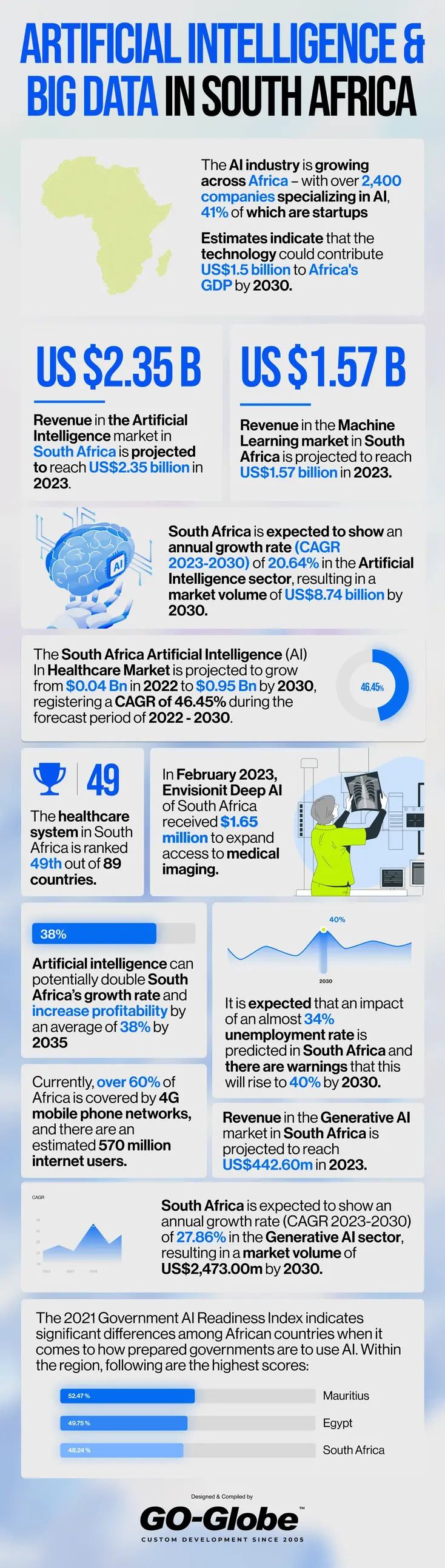
Manus AI’s autonomous capabilities could be a game-changer for African industries. While much of the AI innovation today is happening in Silicon Valley or China, the potential impact on Africa’s business landscape, education, governance, and economic development cannot be overlooked.
📉 Check out this infographic below for key insights into AI’s rapid growth in Africa:
How Africa Could Use Manus AI Today
AI’s potential in Africa isn’t just theoretical—there are real-world applications happening right now that hint at what Manus AI could achieve on a larger scale.
✅ Business & Finance – AI models like Pula are already using machine learning to provide microinsurance to farmers. Now, imagine an AI agent like Manus AI automating loan approvals, risk assessments, and financial forecasting—all without human intervention.
✅ Healthcare – AI-powered fetal monitoring has already reduced stillbirths in Malawi by 82%. With Manus AI’s research and report-generation abilities, medical professionals could automate patient documentation, analyze clinical trends, and accelerate decision-making.
✅ Education & Workforce Development – Companies like CDIAL are developing AI tools for African language translation. But what if Manus AI could automate training programs, summarize research papers, or even generate educational materials for under-resourced schools?
✅ Agriculture & Climate – Kenyan farmers are already using AI-driven agronomist tools to optimize crop yields. But with Manus AI’s execution capabilities, farmers could automate data collection, analyze weather patterns, and receive personalized farming strategies—all without manual input.
This is AI as a workforce multiplier—not replacing jobs, but scaling expertise and bridging gaps where skilled professionals are scarce.
💡 The Challenges: AI Autonomy in an African Context
Of course, while the potential is huge, Africa also faces unique challenges when it comes to AI adoption:
🔴 Data Scarcity – Many AI models, including Manus AI, rely on vast amounts of training data—but African languages and datasets are often underrepresented in global AI models.
🔴 Infrastructure Gaps – While AI can drive efficiency, internet access and computational resources remain limited in many areas, making cloud-based AI tools harder to deploy.
🔴 Regulatory & Ethical Concerns – Can autonomous AI be trusted to make decisions in legal, financial, or government settings? How do we ensure it aligns with African values?
However, these challenges aren’t roadblocks—they’re opportunities. Countries like Kenya, South Africa, Nigeria and Zambia are already investing in AI strategies and regulatory frameworks to ensure AI adoption aligns with African needs and priorities.
📢 The Big Question: Who Will Own AI in Africa?
AI isn’t just about who uses it—it’s about who controls it. If Africa isn’t proactive, it risks becoming just another consumer of AI rather than a creator.
Right now, AI development is heavily dominated by China, the U.S., and Europe. But Africa has an opportunity to:
✔️ Develop localized AI models that reflect African languages, economies, and cultures
✔️ Invest in AI infrastructure to reduce dependence on foreign tech
✔️ Train AI agents like Manus AI to execute tasks that matter for African industries
If African businesses and governments don’t act fast, they may find themselves locked into AI systems they don’t control, relying on AI solutions built for economies that don’t match Africa’s reality.
The question isn’t whether AI will change Africa—it’s who gets to shape that change.
Test Your AI IQ
Think you’ve mastered the AI showdown between Manus AI, GPT-4.5, and Google Gemini? Do you really understand what sets them apart and what this means for Africa’s AI future?
Put your knowledge to the test with these three challenging multiple-choice questions!
Listen To Our Newsletter on the Go!
Pressed for time? Let our AI-powered hosts guide you through this week’s edition. From the rise of Manus AI to the battle between GPT-4.5 and Gemini, and AI’s game-changing impact on Africa’s future, we’ve got you covered.
🎧 Get the full breakdown—on the go!
📢 Final Thoughts: AI Won’t Wait—Is Africa Ready?
The AI revolution isn’t coming—it’s here. Manus AI, GPT-4.5, and Google Gemini are pushing the boundaries of what’s possible, and the world is moving toward autonomous AI agents that don’t just assist, but execute.
For Africa, this presents both an opportunity and a challenge. AI can streamline industries, create new economic opportunities, and bridge critical gaps in education, finance, and healthcare. But if we don’t take ownership—if we don’t build, invest, and regulate AI on our terms—Africa risks becoming just another consumer of foreign AI models, rather than a leader in AI development.
💡 So what happens next?
That depends on how Africa chooses to engage. Will businesses and governments embrace AI as a tool for transformation, or will they watch from the sidelines as global tech giants dictate the future?
The choice is ours—but one thing is certain: AI won’t wait.
Catch you on the flip side,
The African AI Narrative Team.