- The African AI Narrative
- Posts
- Zambia’s Bold AI Gamble: Will It Lead Africa’s Digital Future?
Zambia’s Bold AI Gamble: Will It Lead Africa’s Digital Future?
Can Zambia’s National AI Strategy position it as Africa’s tech leader, or will global superpowers stay ahead?

Sarah Njamu
February 27th, 2025 • Estimated Reading Time: 9 minutes

In our previous edition, we dived deep into one of the most high-stakes feuds in the tech world—Elon Musk vs. Sam Altman. Once allies in founding OpenAI, their relationship has unraveled into a decade-long battle of vision, power, and ideology. From Musk’s departure and legal battles to his audacious $97.4 billion bid to acquire OpenAI, we unraveled the twists and turns that have defined this epic AI rivalry.
But that’s just the tip of the iceberg. Beyond the boardroom brawl, the real war is for AI dominance. Nations are no longer just observers; they are strategic players in a silent arms race where intelligence—not weapons—determines global power.
🔹 The U.S. doubles down on AI infrastructure, but can it retain its edge?
🔹 China is accelerating AI breakthroughs—will it outpace Silicon Valley?
🔹 Europe positions itself as the AI regulator—but can ethics compete with speed?
🔹 India, Russia, Saudi Arabia, and Africa are rising forces—will they rewrite the AI narrative?
We also spotlighted Africa’s AI frontrunners—South Africa, Nigeria, Mauritius, Rwanda, and Egypt—nations shaping the continent’s AI revolution. But is Africa moving fast enough, or will it be left behind in the global intelligence race?
If you missed this edition, stop everything and catch up now! This was more than just an update; it was a wake-up call. AI is not just the future—it’s happening now. The question is: will you be part of it?
🔗 Read the full story now! 👇🏾

Zambia’s National AI Strategy: A Bold Leap into the Future
Zambia has taken a significant step towards embracing the AI revolution, positioning artificial intelligence not merely as a technological tool but as a transformative force capable of redefining industries, governance, and everyday life. The National AI Strategy is a well-crafted blueprint that balances ambition with pragmatism, offering a roadmap to economic empowerment, public service enhancement, and global competitiveness.
But beyond the policy framework and strategic objectives, the real question is: Will Zambia translate this vision into action? How can it overcome challenges and ensure AI benefits all Zambians, not just a privileged few? Let’s break it down.
Zambia’s AI Vision: A commitment to inclusive progress
The strategy sets a forward-thinking agenda, recognizing AI as a catalyst for national transformation. It aligns AI with Zambia’s broader development goals, seeking to:
✅ Stimulate economic growth by fostering AI-driven industries and innovation.
✅ Improve governance and public services, making them more efficient and accessible.
✅ Ensure AI benefits all citizens, not just corporations or tech elites.
✅ Position Zambia on the global AI map, competing with leading nations in AI-driven solutions.
This is not just about AI adoption—it’s about AI for development, AI for equity, and AI for the future.
🚧 The Challenges Ahead: Will Zambia be able to deliver on this AI Vision?
While Zambia’s AI strategy is ambitious and forward-thinking, several challenges loom:
🛑 Resource Constraints: AI development is expensive—how will Zambia finance infrastructure, research, and training?
🛑 Digital Divide: Rural communities often lack basic internet access—can AI solutions truly reach everyone?
🛑 Talent Shortages: AI expertise is limited in Zambia—can local universities produce enough skilled professionals?
🛑 Regulatory Readiness: AI governance is complex—will Zambia’s policies keep up with rapid advancements?
🛑 Global Competition: Zambia is not alone in the AI race—can it compete with AI powerhouses like the U.S., China, and South Africa?
Addressing these challenges requires strong leadership, innovative financing models, and unwavering commitment.
The Road Ahead: What Must Zambia do to Succeed?
For Zambia to turn this strategy into reality, the government and stakeholders must focus on:
Massive AI education initiatives—training the next generation of AI developers, policymakers, and business leaders.
Public-private partnerships—leveraging investments from tech firms, startups, and global AI bodies.
Fast-tracked AI infrastructure development—ensuring data centers, high-speed internet, and computing power are prioritized.
Grassroots AI adoption—incentivizing AI startups and small businesses to integrate AI into their models.
Ethical AI leadership—ensuring AI is used responsibly, without bias, and for societal good.
🔗 Additional Insights & Resources:
To deepen your understanding of Zambia's AI journey, explore the comprehensive National AI Strategy (2024–2026) document outlining the nation's detailed framework, goals, and governance structure. DOWNLOAD IT BELOW👇🏾
|

For the latest perspectives and real-time updates, check out Africa AI News: Zambia Launches AI Strategy to Boost Innovation. 👇🏾
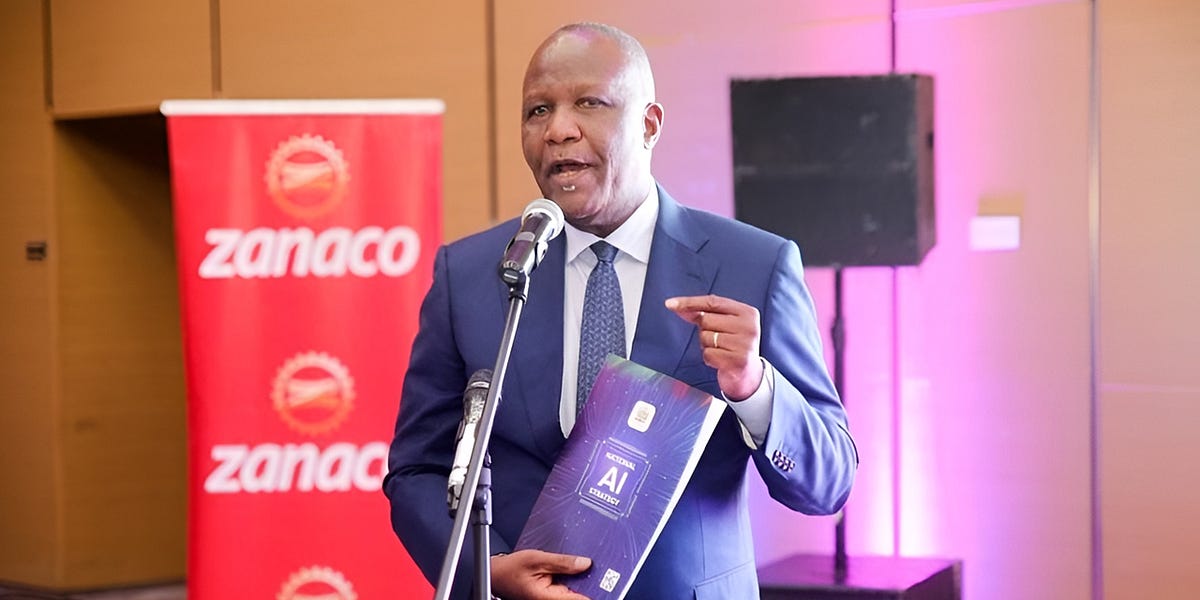
This article breaks down how Zambia's AI ambitions are being realized and highlights the challenges and opportunities that lie ahead.
🎥 Parting Piece: Be Inspired by Africa’s Visionaries
To truly understand the magnitude of this moment, we leave you with a powerful conversation between Strive Masiyiwa (African billionaire entrepreneur and philanthropist) and James Manyika (Senior Vice President at Google & AI expert).
📌 Why watch this?
🔹 They discuss Africa’s place in the digital and AI revolution.
🔹 They highlight the importance of AI in economic transformation.
🔹 They inspire a bold mindset shift—that Africa’s greatest resource is not its minerals, but its people and ideas.
This is your moment to listen, learn, and act. Let this discussion ignite your passion to push Africa’s AI revolution forward.
Africa’s AI Revolution: Homegrown Language Models Rising to Compete with ChatGPT & DeepSeek
For years, AI innovation has been dominated by global tech giants from the U.S. and China, with models like ChatGPT, DeepSeek, and Google Gemini setting the pace. But here’s what the world isn’t talking about: Africa is building its own AI revolution—one that is uniquely African, deeply rooted in our languages, and designed for our people.
AI is no longer something we consume from abroad—it is something we are now creating. Across the continent, African companies and researchers are developing large language models (LLMs) and AI-driven applications that rival global counterparts. But for these innovations to thrive, they need our support, our collaboration, and our voices.
This is more than just technology—it’s a movement. Let’s dive in.
🌍 The Rise of African AI: Building Our Own ChatGPT & DeepSeek
AI must reflect the languages, cultures, and realities of those who use it. For too long, African languages and perspectives have been underrepresented in AI models. Now, that’s changing. African AI companies are stepping up—designing homegrown innovations by Africans, for Africans.

1️⃣ Lelapa AI – AI for African Languages 🇿🇦
Based in South Africa, Lelapa AI is building AI that speaks African languages fluently. Their model, InkubaLM, specializes in low-resource African languages like isiZulu, Yoruba, Hausa, Swahili, and isiXhosa—ensuring high accuracy, cultural context, and linguistic preservation.
Key Insight: Technology that understands us. Imagine an AI chatbot that fluently speaks your local language without errors.
🔗 Deeper Dive: InkubaLM's Impact
2️⃣ CDIAL – Revolutionizing AI for Indigenous Languages 🇳🇬
CDIAL is revolutionizing AI communication across Africa with Indigenius Mobile, supporting 180 African languages for real-time translations. Language is power—CDIAL ensures Africa doesn’t just adapt to AI, but shapes it.
Key Insight: Cultural preservation is key for thriving African languages in the digital age.
🔗 Learn More about CDIAL
3️⃣ AfroLM – A Multilingual AI Model for Africa 🇪🇹
AfroLM is trained on 23 African languages, outperforming global LLMs in accuracy. It powers Africa’s own digital tools—shaping the internet to be more accessible for millions.
Key Insight: If Africa doesn’t build its own language models, foreign AI will define our online experience.
🔗 Read AfroLM Research
4️⃣ Lesan AI – Africa’s AI Translation Pioneer 🇪🇹
Lesan AI ensures that online content is accessible in local African languages. It's a powerful step toward cultural inclusion in digital spaces.
Key Insight: AI must speak our languages, understand our dialects, and respect our cultural nuances.
🔗 Explore Lesan AI
5️⃣ 🌟 Orange’s Partnership with OpenAI & Meta – AI for Africa’s Future 🇫🇷🇨🇮
Orange, in collaboration with OpenAI and Meta, is developing AI models tailored for West African languages—signaling growing recognition of Africa’s AI potential.
Key Insight: While partnerships are positive, African-led AI initiatives must take the lead for sustainable innovation.
🔗 More on Orange's PartnershipSupport African AI & Make It Accessible!
These developments prove one thing—Africa is not just participating in AI; we are shaping its future. But to succeed, we need a collective effort:
🔹 Tech communities: African AI developers must collaborate and share knowledge.
🔹 Governments: More funding and policies are needed to accelerate local AI innovation.
🔹 Businesses: African companies must prioritize local AI solutions over foreign alternatives.
🔹 Individuals (YOU!): Support African AI startups, share their work, and use their tools.
What You Can Do Today:
✅ Spread the word! Share this newsletter with your network.
✅ Use African AI tools—support homegrown innovation.
✅ Join AI discussions—engage in tech forums and advocate for African AI.
The future of AI in Africa is being written now. The question is: Will we own it, or will we continue to be consumers of foreign technology?
Test Your AI IQ
Think you’ve grasped Zambia’s bold AI vision? Put your knowledge to the test with these three challenging multiple-choice questions.

🎧 The African AI Narrative: Audio Edition
🎧 Pressed for Time? Listen On-The-Go!
Don’t have time to read the full breakdown of Zambia’s bold AI ambitions?
Let our AI-powered hosts guide you through the key highlights—from economic empowerment to ethical governance—in just a few minutes.
Hit play and stay ahead in Africa’s AI revolution. 🚀🌍
Final Thoughts: Will Zambia Lead Africa’s AI Revolution?
Zambia’s National AI Strategy is a bold step forward, signaling a commitment to digital transformation. But a strategy is only as powerful as its execution.
If Zambia can mobilize resources, upskill its workforce, and create an enabling AI ecosystem, it has the potential to lead Africa’s AI revolution. However, failure to act decisively could see Zambia fall behind as other nations move swiftly in the AI race.
🌟 The future of Zambia’s AI journey is being written now. The question is—will it be a story of success or missed opportunity?
🔗 What are your thoughts on Zambia’s AI strategy? Will it position Zambia as a tech leader, or are there gaps that need urgent attention? Join the conversation!
Catch you on the flip side,
The African AI Narrative Team.